- Home »
- Catalog »
- Valvetrain Components »
- Lifters »
- Hydraulic Flat Tappet Lifters
Hydraulic Flat Tappet Lifters

Pontiac V8 Hydraulic Flat Tappet Lifters
Quiet and Proven — Hydraulic Flat Tappet Lifters for Pontiac V8s
Hydraulic flat tappet lifters are what most Pontiac V8s left the factory with, and they are still the right answer for a stock rebuild or a mild street cam. The hydraulic piston takes up lash automatically, so the valvetrain stays quiet and needs no adjustment in service once preload is set correctly.
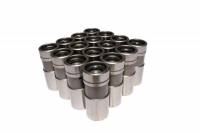
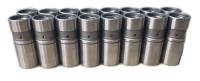
Butler stocks the Hy-Lift Johnson standard Pontiac hydraulic lifter, made in the USA at .842" diameter, and the Comp Cams Pro Magnum hydraulic race flat tappet lifter for engines that spin higher than a stock lifter is happy with. Both are Pontiac-specific parts sold in sets of sixteen.
Browse Hydraulic Flat Tappet Lifters Products


Popular Brands:
More About Hydraulic Flat Tappet Lifters
1. Standard or Race
Two lifters, two jobs. The difference is what happens at high rpm.
| Standard hydraulic | the Hy-Lift Johnson lifter is .842" diameter, 97 grams, with a 2.05" overall height. It uses a patented orifice metering valve that precisely meters oil to the rocker arms, and keeps continuous contact between that metering valve and the hardened pushrod seat so the top end does not get over-oiled at high engine speeds. |
| Race hydraulic | the Comp Pro Magnum is .842" diameter, 96 grams, with a 2.01" seat height. It is specifically designed to perform at higher engine speeds, and the proper position of its internal piston at higher rpm prevents the lifter from pumping up. |
| Longer piston | the standard lifter contains a longer piston than a conventional hydraulic, which provides more load bearing surface and increases lifter longevity. A lightweight check valve disc keeps response quick at all engine speeds and loads. |
2. Preload and the Adjustable Valvetrain
The race lifter is not a drop-in replacement for the standard one, and this is why.
| Adjustable valvetrain required | Comp states the Pro Magnum requires an adjustable valvetrain. If the engine has non-adjustable rockers, that has to change first. |
| Preload spec | preload the race lifters .002" to .004" with the engine warm. That is a much tighter window than a street hydraulic and it has to be checked, not assumed. |
| Seat height difference | the race lifter sits .050" lower at the seat than the standard lifter. That is a real pushrod length change. Check length with an adjustable checker rather than reusing what was in the engine. |
3. Break-In Is Not Optional
A flat tappet lobe and a flat lifter face have to wear in against each other. That process only happens once.
| New cam, new lifters | never put used lifters on a new cam. Each lifter has already mated to a specific lobe and will not survive being moved. |
| Break-in lubricant | use a break-in oil or additive with a high zinc and phosphorus package. Butler carries Comp Cams break-in lubricant in the Camshaft Accessories category. |
| Spring pressure during break-in | high open pressures are hard on a lobe that has not worn in yet. If your package runs heavy springs, plan the break-in accordingly. |
If your cam card calls for a specific lifter seat height or preload, send it over with the order and we will confirm the lifter and pushrod length together.
Not sure what your Pontiac needs?
Call our tech team at 866-762-7527. Tell us your engine, heads, car, and power goal, and we will put the parts together as one combination that works.