- Home »
- Catalog »
- Transmission & Drivetrain »
- Flexplates (Automatic)
Flexplates (Automatic)

Pontiac V8 Flexplates (Automatic)
Balance First — Flexplates (Automatic) for Pontiac V8s
A flexplate is the one part in an automatic Pontiac that has to agree with your crankshaft before anything else will work. Get the balance wrong and the engine shakes no matter how well it was assembled. Stock flexplates also crack around the crank hub behind a high-stall converter, which is why heavier plates exist.
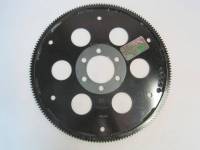
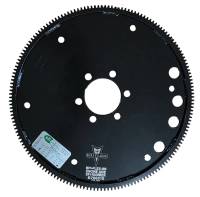
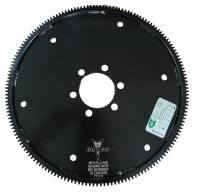
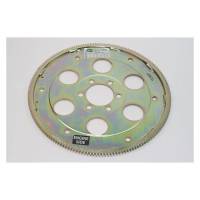
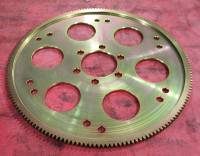
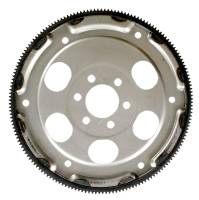
Butler stocks SFI approved 166 tooth flexplates with a 2.75" center in both neutral (internal) balance and stock (external) balance, from Butler's own BP Series plus PRW, Hays, ATI and Meziere, along with the spacer rings early cranks need.
Browse Flexplates (Automatic) Products







Popular Brands:
More About Flexplates (Automatic)
1. Neutral balance or stock balance
This is the whole page in one section. Pontiac balanced its cranks from the factory using external, or stock, balance. That method required an offset weighted flexplate, sometimes with holes drilled to lighten one side, sometimes with an additional weight bolted on to add it. Butler and most shops today internally, or neutrally, balance crankshafts instead, which lets you run a flexplate with no offset holes and no added weight.
| If your engine was neutral balanced | you need a neutral (internal) balance flexplate. Every Butler-built rotating assembly falls here unless you were told otherwise. |
| If the engine is stock balanced | you need a stock (external) balance flexplate with the factory offset weight, and it must be the correct one for your engine. |
| Butler flexplates must match the engine's balance | this is not a preference, and a mismatch is not something you can dial out later. If you do not know how your engine was balanced, call the shop with the build information before ordering. |
2. Why an SFI flexplate instead of a stock one
| Thickness | Butler's BP Series flexplates are 40 percent thicker than a stock flexplate and are SFI 29.1 certified, rated to 12,500 rpm, with double welded ring gears. |
| What kills stock plates | factory plates tend to crack around the crankshaft hub under high torque and high rpm. A high-stall converter multiplies exactly that load. |
| Ring gear | the performance plates use welded ring gears rather than the factory attachment, which is the other common stock failure. |
| Corrosion | plates are offered black coated, gold irradiated or zinc-dichromate plated depending on brand. |
3. Bolt patterns and crank hub size
| Transmission side | the Butler BP Series and PRW Pro Series 166 tooth plates include TH400, TH350 and 700R4 bolt patterns in the one plate, which covers most Pontiac automatic swaps. |
| Crank side, 2.75" center | the standard performance flexplate register. These fit all aftermarket cranks and stock cranks up through 1974. |
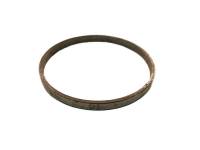
| Early cranks with a smaller hub | Butler makes spacer rings to adapt a 2.5" crank hub or a 2 9/16" crank hub up to a 2.75" flexplate. The ring has to be tack welded in place, either to the crank hub or to the flexplate. |
| Late stock replacement | a 1975-79 stock balanced replacement flexplate is offered with the 2.50" center those cars use. |
4. Matching the flexplate to the converter
The flexplate and the torque converter are one decision, not two.
| 166 tooth, dual pattern | most TCI converters for TH350 and TH400 are listed for the dual bolt pattern that a 166 tooth flexplate provides. |
| Higher stall means more load | the higher the stall speed, the more reason to be on an SFI plate rather than a stock one. |
| Some converters need drilling | higher stall TCI converters can require the flexplate to be drilled for 7/16" bolts. Check the converter listing before you assume the holes line up. |
Order the flexplate with the converter and tell us how the engine was balanced. Those two pieces of information prevent almost every automatic driveline problem we see come back through the shop.
Not sure what your Pontiac needs?
Email our tech team at tech@butlerperformance.com. Tell us your engine, heads, car, and power goal, and we will put the parts together as one combination that works.