
- Home »
- Catalog »
- Engine Components- Internal »
- Crankshafts »
- 3" Main- Forged Crankshafts for 326/350/389/400/Aftermarket Blocks
3" Main- Forged Crankshafts for 326/350/389/400/Aftermarket Blocks

Pontiac V8 3" Main- Forged Crankshafts for 326/350/389/400/Aftermarket Blocks
Small Journal, Big Stroke — 3" Main- Forged Crankshafts for 326/350/389/400/Aftermarket Blocks for Pontiac V8s
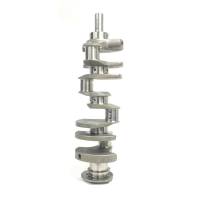
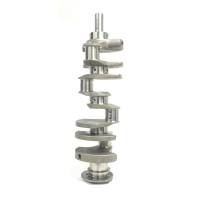
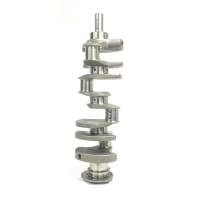
This is where a 3.00" main Pontiac stops being a 400 and starts being whatever you want it to be. Forged 4340 crankshafts for the 326, 350, 389, 400 and aftermarket blocks run from the stock 3.75" stroke all the way out to 4.650", which is the deepest stroke Butler catalogues on the small-journal block.
Butler stocks Eagle, Scat, Molnar and Ohio here, in both the factory 2.250" Pontiac rod journal and the 2.200" big-block journal that opens up the stroker rod catalogue. Eagle's ESP Armor surface finish is available on this line.
Browse 3" Main- Forged Crankshafts for 326/350/389/400/Aftermarket Blocks Products



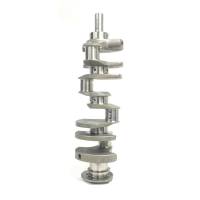
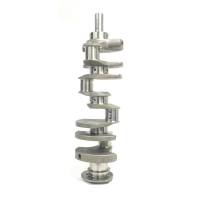




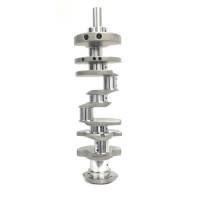
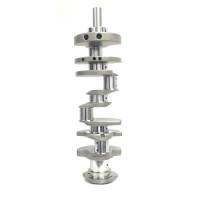

Popular Brands:
More About 3" Main- Forged Crankshafts for 326/350/389/400/Aftermarket Blocks
1. The stroke menu
The 3.00" main block takes the widest range of strokes Butler sells, which is exactly why so many big-inch Pontiacs start life as a 400.
| 3.75" | Ohio's forged crank in the factory stroke on a 2.250" Pontiac rod journal — a forged replacement that keeps stock geometry. |
| 4.000" | Molnar and Scat both offer this stroke. Molnar catalogues it two ways, on the 2.200" big-block journal and on the 2.250" Pontiac journal. |
| 4.210" | Eagle's 4.210" on the 2.250" Pontiac journal, listed against a 6.625" rod length — the 455 stroke in a small-main block, still on stock-length rods. |
| 4.250" | The most heavily stocked stroke on the page, from Eagle, Scat, Molnar and Ohio, generally on the 2.200" big-block journal with a 6.700" or 6.800" rod. |
| 4.500" and 4.650" | Eagle, Scat and Molnar go to 4.500"; Molnar takes it to 4.650". Both on the 2.200" journal, both deep-stroker territory where block clearancing becomes part of the job. |
2. Rod journal decides your rod catalogue
This is the choice that quietly sets the rest of the build, and it is made when you buy the crank.
| 2.250" Pontiac | Keeps you on Pontiac-journal rods and Pontiac-journal rod bearings. Available in the 3.75", 4.000" and 4.210" strokes here. |
| 2.200" big-block | What most of the 4.250" and longer cranks use. It opens up a much larger rod selection and a lighter big end, and it means big-block rod bearings. |
| Rod length pairing | Eagle's 4.210" is listed with a 6.625" rod, the 4.250" cranks with 6.700" or 6.800", and Scat quotes 6.700" or 6.800" on its 4.250" and 4.500" cranks. Match the rod to the crank spec sheet, not to habit. |
| Hub register | 2.75" across the line, which is what a Pontiac balancer expects. |
3. What forged actually buys you
Butler's own crankshaft copy makes the case without overselling it.
| Strength and durability | Butler describes forged as a tremendous advantage over cast, and as inexpensive insurance even at a horsepower level that does not yet demand it — it lets you add power later without rebuilding the bottom end again. |
| Scat's process | Premium non-twist forgings, precision ground and micro polished, heat treated and ion nitrided, with straight shot and chamfered oil holes and lightening holes with large radii on all journals. |
| Eagle ESP Armor | A surface finishing process available only through Eagle. It is not a coating and not a chemical etch — it produces a very slick surface that reduces bearing friction, slows oil heating, cuts windage losses and improves corrosion resistance. Eagle includes a one year limited warranty against breakage when ESP Armor is used on a 4340 crank or H-beam rod. |
4. Balancing and what ships with the assembly
A forged crank is only as good as what it is balanced against, and Butler does not farm that out.
| The Butler Process | Every rotating assembly Butler sells, regardless of brand, is balanced in Butler's shop by its own machinists. Rods and pistons are weighed and pin fitted, and the crank is computer balanced to the rest of the assembly. |
| Documentation | The weights and information are recorded on a balance card that ships with the assembly. |
| Bob weight service | Butler will also balance a crankshaft to a bob weight you supply. A neutral balanced crank has to run a neutrally balanced flexplate, flywheel and balancer. |
Tell us the block, the stroke you are chasing and the rod length you want to run, and the crank comes down to one or two part numbers. If a power adder is in the plan, say so up front — it changes the recommendation.
Not sure what your Pontiac needs?
Email our tech team at tech@butlerperformance.com. Tell us your engine, heads, car, and power goal, and we will put the parts together as one combination that works.