- Home »
- Catalog »
- Camshafts & Cam Kits »
- Full Custom Hyd & Solid Roller Cams »
- Solid Flat Tappet Cams and Cam Kits
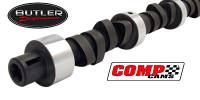
Solid Flat Tappet Cams and Cam Kits

Common Usage: Moderate street performance to serious race
Key Benefits: Increased engine rpm and profile aggressiveness vs. economical cost of hydraulic flat tappet
Limitations: Long-term wear, limited rpm range, periodic valve adjustment required
Notice: All flat tappet cams require break-in oil and the use of oil additives. They also require a more extensive break-in process.
|
PART #
|
Rated Duration
|
Duration @ .050
|
Lobe Separation
|
Valve Lift 1.5
|
Valve Lift 1.6
|
|
CCA-51-659-5
|
290 I - 304 E
|
255 I - 266 E
|
106
|
.540 I - .535 E
|
.576 I - .570 E
|
|
CCA-51-660-5
|
300 I - 314 E
|
265 I - 276 E
|
106
|
.563 I - .557 E
|
.600 I - .594 E
|
|
CCA-51-661-5
|
310 I - 314 E
|
275 I - 276 E
|
106
|
.585 I - .557 E
|
.624 I - .594 E
|
Cam Kits available for your application-Contact Us Today
Choosing the Right Camshaft for Your Pontiac Build
Selecting the right camshaft is one of the most important decisions in any Pontiac engine build. The camshaft helps determine where the engine makes power and what components will be required to achieve the desired results. At Butler Performance, we consider these when giving camshaft recommendations.
For street-driven Pontiacs, drivability often matters just as much as peak power. A street cruiser typically needs a camshaft that delivers strong low- and mid-range torque and provides smooth idle characteristics. In many applications, hydraulic flat tappet cams remain a cost-effective solution for owners who need dependable performance without extensive maintenance. Street/strip combinations require a more balanced approach. These builds often demand increased airflow and higher RPM capability while still retaining acceptable manners for weekend cruising. Factors such as compression ratio, cylinder head flow, converter stall speed, and rear gearing all play a role in selecting the proper cam profile.
For weekend drag racing applications, camshaft selection is focused on making the most power within the engine's intended RPM range. While a larger camshaft can increase top-end performance, choosing one that is too aggressive may move the powerband beyond where the vehicle performs best. Dedicated race engines prioritize maximum power over fuel economy or vacuum production. Many competitive builds use roller cams or solid flat tappet cam kits to support high-RPM performance and increased airflow.
Vacuum requirements should never be overlooked. Vehicles equipped with factory-style power brakes generally require sufficient idle vacuum to maintain proper brake assist. An overly aggressive camshaft may reduce vacuum levels, affecting drivability and brake performance. Matching the camshaft to the vehicle's intended use helps prevent these issues and allows engines to perform as expected.
For more inquiries, contact Butler Performance today to receive a camshaft recommendation tailored to your Pontiac build.
Browse Solid Flat Tappet Cams and Cam Kits Products

Popular Brands:
More About Solid Flat Tappet Cams and Cam Kits
FAQs
Can I install a new camshaft without replacing my valve springs?
Not always. Camshafts with increased lift or more aggressive lobe designs often require upgraded valve springs. Running mismatched springs can negatively affect performance and reliability.
Will a larger camshaft automatically make more horsepower?
Not necessarily. A camshaft that is too large for the combination can reduce low-speed torque and overall performance. Proper component matching is more important than choosing the largest available cam.
Do I need a higher-stall converter when upgrading my camshaft?
Many performance camshafts work best with a converter matched to the engine's powerband. Depending on the cam selection, a higher-stall converter may improve acceleration and overall vehicle performance.
How often should valve lash be checked on a solid camshaft setup?
Valve lash intervals vary by application, but solid lifter combinations should be inspected periodically to ensure consistent performance and to identify potential issues before they become serious problems.