- Home »
- Catalog »
- Crate Engines and Builder Kits »
- Build Yours Like Butler »
- 500hp+ Pontiac Carbureted Muscle Car Engine on Pump Gas
500hp+ Pontiac Carbureted Muscle Car Engine on Pump Gas
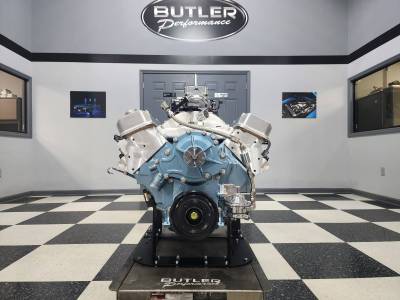
Pontiac V8 500hp+ Pontiac Carbureted Muscle Car Engine on Pump Gas
The Classic Combination — 500hp+ Pontiac Carbureted Muscle Car Engine on Pump Gas for Pontiac V8s
This is the parts list behind Butler's 500hp+ carbureted pump gas muscle car engine, built on a 400 block stroked to 460-467 cu. in. It is the most straightforward way to make real power in a GTO, Firebird or Le Mans: no wiring, no sensors, a carburetor on top and a distributor in the hole.
The list runs from the 4.250" stroke balanced rotating assembly and Edelbrock round port CNC chamber heads through the Performer RPM intake, MSD ignition, roller rockers, oil pan, valley pan, timing cover, starter and every bolt and gasket in between.
Browse 500hp+ Pontiac Carbureted Muscle Car Engine on Pump Gas Products









Popular Brands:
-
ARP
-
BOP
-
-
Canton Racing Products
-
Clevite Bearings
-
Driven
-
Dura-Bond
-
Eagle Specialty
-
Edelbrock
-
Federal Mogul
-
Fel-Pro
-
Flowkooler
-
IMI Performance Products
-
Johnson Lifters
-
JPP Performance
-
Melling
-
Mr Gasket
-
MSD Performance
-
NGK
-
-
-
-
-
-
-
-
More About 500hp+ Pontiac Carbureted Muscle Car Engine on Pump Gas
1. What This Engine Is
A carbureted 460-467 cu. in. Pontiac on a factory 400 block, built to make 500 or more horsepower on pump gas and still idle in traffic. It suits the owner who wants a muscle car that looks and sounds period-correct, and who would rather tune with jets and a timing light than a laptop.
| Who it fits | a street-driven A-body or F-body with a 400 block already in it, or a good 400 core waiting on a plan. |
| Why carbureted | fewer parts, simpler install, and nothing under the dash to wire. Everything that makes the power is on top of the engine where you can see it. |
| What the list gives you | the complete build, not just the headline parts. If you buy every line, nothing is missing on assembly day. |
2. The Short Block: 400 Block, 4.250" Stroke
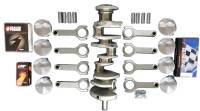
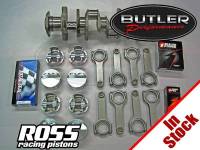
The bottom end is Butler's balanced rotating assembly for the 400 block, a 4.250" stroke long-rod package that lands at 460-467 cu. in. depending on the bore your block cleans up at.
| Crank | a new cast or forged 4.250" stroke crank on 3.00" mains with a 2.200" big-block Chevy rod journal, from Eagle or Scat. |
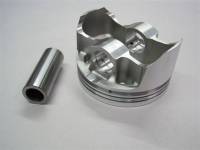
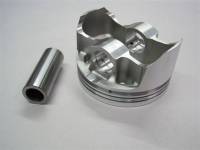
| Rods and pistons | 6.800" full-float bushed rods, pin fitted, with Butler/Ross forged flat tops on Butler's exclusive true-Pontiac strut-style forging. A version with an offset ring support is available for early 400 blocks with deep valve notches, or for nitrous and boost. |
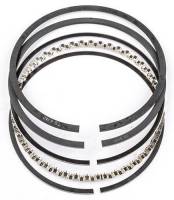
| Rings and bearings | Total Seal Classic Race rings, with rod and main bearings selected for proper clearance. |
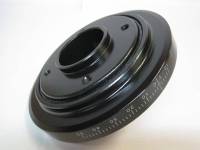
| Balanced internally | the assembly is balanced in Butler's shop, which decides what you bolt to the back of the crank. |
| Block note | Butler does not recommend this stroke on blocks with casting numbers ending in 557, and suggests limiting those to 4.000" stroke and under 500 hp because of thinner main webbing. |
3. Heads, Cam and Valvetrain
The head is what makes this a 500hp engine rather than a torquey 467. The build uses Edelbrock's round port casting with the Fast-Burn CNC chamber.
| Cylinder heads | Edelbrock round port Pontiac heads with 87cc Fast-Burn CNC chambers, set up for a hydraulic roller. |
| Head bolts | the ARP D-port head bolt kit sized for 400-455 with Edelbrock heads. Factory bolts are not the place to save money under this cylinder pressure. |
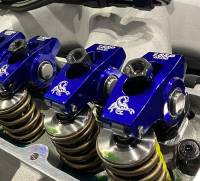
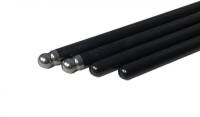
| Rockers and pushrods | Scorpion Endurance 1.65 roller rockers with custom-length two-piece chromemoly pushrods, so the geometry is correct instead of close. |
| Timing | a billet double roller timing set, with a cam thrust plate, cam bolt and cam washer to retain the fuel pump eccentric. |
4. Induction, Ignition and Fuel
On a carbureted engine these three parts are the tune. Butler's list keeps them conventional on purpose.
| Intake | the Edelbrock Performer RPM Pontiac manifold, the dual-plane that suits a street stroker in this power range. |
| Carburetor | a double pump four-barrel, sized to the combination. Butler specifies it with the cam and the converter, not off a horsepower chart. |
| Ignition | a complete MSD Pro Billet ignition kit with 8.5mm spark plug wires and a wire separator kit. |
| Distributor gear | an aftermarket distributor takes a .500" shaft gear. Butler uses the BOP Carbon Ultra-Poly composite gear, which replaces a worn bronze gear and keeps metal shavings out of the oil. |
| Fuel | a mechanical RPM series fuel pump, or a block-off plate if you go electric. |
5. Oiling, Sealing and the Details That Bite
This is the half of the list most home builds forget, and where a first start-up goes wrong.
| Oiling | a Butler 80psi PRO oil pump, a stock replacement baffled 6-quart pan for cars with stock clearance, and Driven break-in oil for the cam. |
| Rear main seal | a one-piece dual-lip Viton seal for 3.00" main blocks. Its relocated parting line and double lip are aimed squarely at the leak this engine family is famous for. |
| Valley pan clearance | the Tomahawk stock-appearing valley pan clears solid and hydraulic roller lifters, but valley pan to intake clearance must always be checked on a Pontiac. You may have to grind the bottom of the intake runners or the top edges of the pan. It is for non-EGR intakes only. |
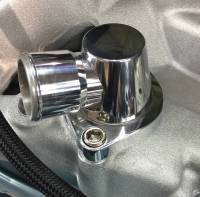
| Cooling and front cover | a new 11-bolt timing cover with the stainless divider plate, steel sleeves, gaskets and O-ring, plus a high-flow water pump and thermostat. |
6. Internal Versus External Balance
Get this wrong and the engine shakes no matter how well it was machined.
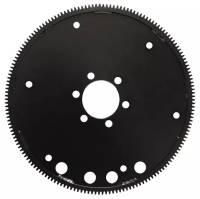
| How Pontiac did it | the factory externally balanced its cranks, using an offset-weighted flexplate or flywheel, sometimes drilled to lighten one side, sometimes with weight added. |
| How Butler does it | Butler and most shops now balance the crankshaft internally, so the engine takes a neutral balance flexplate or flywheel with no offset holes or added weight. |
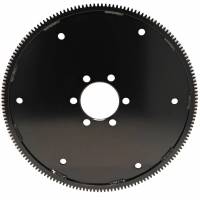
| Choose accordingly | Butler's SFI approved 166-tooth flexplates are offered in both neutral and stock balance with TH400, TH350 and 700R4 bolt patterns, and spacer rings are available for cranks with a 2.5" or 2-9/16" hub. |
7. Finishing the Outside of the Engine
The parts that make an engine look finished are also the ones that get forgotten until the car is on the lift.
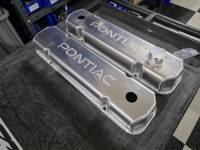
| Valve covers | stock chrome covers for a factory look, or Butler's hand-fabricated aluminum covers in two heights with a CNC billet fill cap. Height matters once you are running roller rockers. |
| Crankcase ventilation | a long 90 degree PCV valve with the correct grommet for the valley pan, plus a push-in or twist-in breather on the opposite cover. |
| Bolt kits | a complete stainless accessory bolt kit in allen or hex head, which is cheaper and faster than sorting a coffee can of used hardware. |
| Paint and handling | correct-period engine paint, and a Butler engine cradle for storage and transport, the same cradle that ships under a Butler engine. |
Work down the list and mark what you already own. When you call, have the car, transmission, gear ratio and converter ready, because the carburetor, the cam and the compression all get chosen off those, not off the displacement.
Not sure what your Pontiac needs?
Email our tech team at tech@butlerperformance.com. Tell us your engine, heads, car, and power goal, and we will put the parts together as one combination that works.