- Home »
- Catalog »
- Gaskets and Freeze Plugs »
- Valve Cover Gaskets
Valve Cover Gaskets

Pontiac V8 Valve Cover Gaskets
Pick Your Thickness — Valve Cover Gaskets for Pontiac V8s
Valve cover gaskets are the cheapest leak to fix on a Pontiac V8 and the easiest one to get wrong, because the choice is really about thickness. Too thin and a warped stamped cover will seep; too thick and you change how the cover sits over the rocker gear.
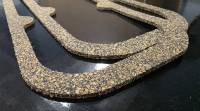
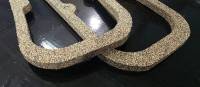
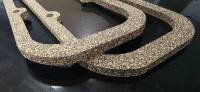
Butler stocks Pontiac valve cover gaskets from 1/8" stock cork through 3/16" rubber with a steel core, 1/4" composite, 5/16" high density, and a 3/8" extra thick set that buys real clearance inside the cover. Most of these fit all Pontiacs from 1959-1979.
Browse Valve Cover Gaskets Products




Popular Brands:
More About Valve Cover Gaskets
1. The thicknesses Butler stocks, and what each is for
All of these seal the same flange. What separates them is material and height.
| 1/8" stock cork | the original-style thickness. The right answer for a stock restoration with straight covers and stock rocker arms. |
| 3/16" rubber with steel core | a rubber gasket with a steel core, sold in pairs. The steel core keeps it from squeezing out under bolt load. |
| 1/4" composite | a middle thickness that gives a warped or previously over-tightened stamped cover something to conform to. Fits all Pontiacs 1959-1979. |
| 5/16" high density | Butler's high density gasket, and the one most rebuilds end up on. Also fits all Pontiacs 1959-1979. Edelbrock's fiber reinforced rubber gasket with a reinforced composite core is the same nominal thickness — Butler's data notes it actually measures .31", not the 3/16" it is described as elsewhere. |
| 3/8" extra thick high density | the same high density material, taller. Butler lists it specifically for extra clearance inside the valve cover. |
2. When you need the thick ones
This is the two-lane part of the decision, and it is worth thinking about before the covers go on.
| Stock rebuild | stock rocker arms under stock stamped covers do not need extra height. Use the stock cork or the 5/16" high density gasket and torque the bolts evenly and lightly. |
| Performance valvetrain | roller rockers, a stud girdle, tall valve springs or a high-lift cam all eat clearance under the cover. The 3/8" extra thick gasket raises the cover and is the cheapest way to buy room before you go looking for taller covers. |
| Check it, do not assume it | put modeling clay or a strip of solder on the highest point of the rocker gear, bolt the cover down, and pull it back off. That tells you whether you need the extra 1/16" or the extra 1/4". |
3. Making them seal and stay sealed
Most valve cover leaks are an installation problem, not a gasket problem.
| Straighten the cover | a stamped steel cover with dimpled bolt holes will never seal. Flatten the flange on a bench before you blame the gasket. |
| Do not over-torque | snug is enough. Crushing a cork gasket squeezes it out of the groove. |
| Grommets | if you are running a breather or a PCV through the cover, order the matching grommet at the same time — a loose grommet leaks oil just as well as a bad gasket. |
Buy the thickness the engine needs, not the one that was on it. Valve cover gaskets are the cheapest part of a Pontiac top end and the one you notice every time you open the hood.
Not sure what your Pontiac needs?
Email our tech team at tech@butlerperformance.com. Tell us your engine, heads, car, and power goal, and we will put the parts together as one combination that works.