Hi-Torq Performance Series Hydraulic Roller Cams (500-600 HP)
Hi-Torq Performance Series Hydraulic Roller Cams (500-600 HP)
Pontiac V8 Hi-Torq Performance Series Hydraulic Roller Cams (500-600 HP)
The 500 to 600 Horsepower Window — Hi-Torq Performance Series Hydraulic Roller Cams (500-600 HP) for Pontiac V8s
The Hi-Torq Performance Series sits between Butler's Street and Aggressive hydraulic roller grinds, and it is aimed squarely at the 500 to 600 horsepowerPontiac V8. Two duration steps, both past the point where a stock converter and stock compression will do the combination justice.
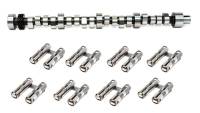
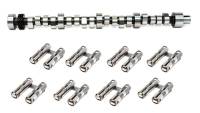
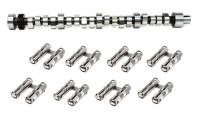
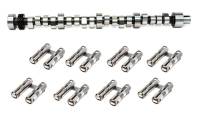
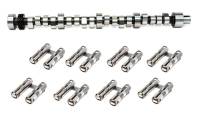
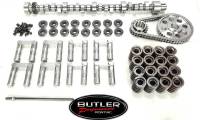
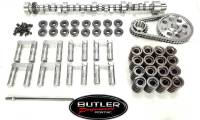
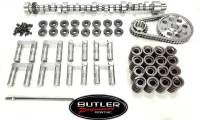
These are Butler/Comp SP billet hydraulic roller grinds, 282/288 and 288/294 advertised, each ground on a choice of lobe separations. Take the cam alone, the cam with Morel, Johnson or Comp Evolution roller lifters, or the master kit with the Pro Billet timing set, springs, retainers and seals matched to your heads.
Browse Hi-Torq Performance Series Hydraulic Roller Cams (500-600 HP) Products
More About Hi-Torq Performance Series Hydraulic Roller Cams (500-600 HP)
1. Where This Series Starts and Stops
The Performance Series is defined by two grinds. Both are further up the duration ladder than anything in the Street Series, and both stop short of the Aggressive Series. Lift is quoted with 1.5:1 rockers on standard journals.
282/288 advertised, 230/236 at .050", .510/.521 lift
the entry to the series, offered on 110, 112 and 114 lobe separation. A big-inch street engine with good heads and a converter behind it will use every bit of this and still drive.
288/294 advertised, 236/242 at .050", .521/.540 lift
the larger of the two, offered on 108, 110, 112 and 114. This one is a build cam, not a bolt-in. It expects compression, head flow and a converter chosen for it.
The step from 230/236 to 236/242 at .050" moves the whole powerband up. On a given combination the bigger grind trades idle quality and low-speed vacuum for area under the curve where the engine actually makes its peak.
2. What the Rest of the Combination Has to Bring
A cam this size is a request, not a gift. The engine has to be able to answer it.
Compression
long seat timing bleeds cylinder pressure at low rpm. Static compression is what buys it back. Put one of these behind a low-compression rebuild and it will feel lazy everywhere the owner actually drives.
Converter
with an automatic, the converter has to let the engine get up into the range the cam was ground for. The wider lobe separations help here; the tighter ones make the converter choice more critical, not less.
Heads and induction
.510" to .540" of valve lift is only worth having if the port and the valve job will use it, and if the intake and exhaust are not the restriction.
Rear gear
a tall highway gear and a 236/242 cam work against each other. Gear the car for where the cam makes power.
3. Lobe Separation and Idle Character
Both grinds come on more than one lobe separation. Tighter LSA gives a rougher idle and less vacuum but more midrange and peak power; wider LSA idles smoother and makes more vacuum with a broader top end.
108
available on the 288/294 grind. Aggressive, choppy idle, the least vacuum of the group.
110
rougher, choppy idle. A common pick when the car is built around the engine rather than the other way round.
112
performance idle with medium choppiness, and the easiest of the four to live with day to day.
114
smoother idle and more vacuum. Worth taking on a heavy car or anything running vacuum accessories at this duration.
Install these at the centerline Butler specifies rather than straight up: 110 LSA to 106, 112 LSA to 108, 113 LSA to 109, 114 LSA to 110 on the intake lobe.
4. Three Ways to Buy It, and the Parts You Cannot Skip
Cam only
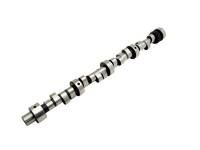
the billet-core camshaft, for an engine that already has the right hydraulic roller lifters and spring package under it.
Cam and lifter kit
adds your choice of Morel 5884R, Johnson 2112-OPR or Comp Evolution hydraulic roller lifters.
Master kit
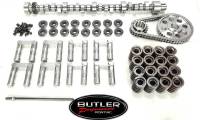
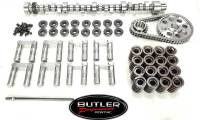
cam plus Morel or Johnson lifters, Pontiac Pro Billet timing set with billet gears, a nine-keyway crank sprocket and a seamed chain, BPI hydraulic roller springs matched to your head type, ten-degree chromoly retainers, locks, valve stem seals and a pushrod length checking tool.
Valley pan
a stock valley pan will not clear the tie bar on hydraulic roller lifters. Butler points to TPP-0421 or a BFA fabricated valley pan.
Distributor gear
the cast iron gear that ran against a flat tappet cam will not live against a roller core. Plan on a bronze or polymer gear.
Duration and lift are quoted with 1.5:1 rockers. If you are running 1.65:1, actual valve lift goes up and you need to check coil bind and retainer clearance against the springs you are installing, not against the published number.
Not sure what your Pontiac needs?
Email our tech team at tech@butlerperformance.com. Tell us your engine, heads, car, and power goal, and we will put the parts together as one combination that works.