- Home »
- Catalog »
- Engine Components- Internal »
- Pins
Pins

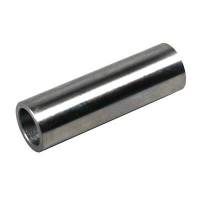
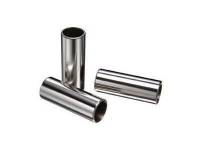
Pontiac V8 Pins
Small Part, Big Load — Pins for Pontiac V8s
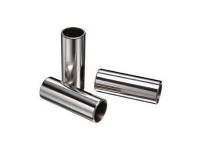
Wrist pins are the smallest part in the rotating assembly and one of the first to complain when cylinder pressure climbs. On a Pontiac build you are almost always choosing between a .980" and a .990" pin, and the piston decides which.
Butler stocks replacement and upgrade pins from Icon and Ross Racing in both diameters, including tapered-wall pins in multiple lengths and heavier-duty bearing steel and H13 tool steel options, plus replacement spiral locks for .980" and .990" pins.
Browse Pins Products



Popular Brands:
More About Pins
1. Diameter and length come from the piston
A pin is not a standalone purchase. It has to match the pin bore in the piston you bought and it has to be the right length for that piston's pin boss.
| .980" | The common Pontiac performance pin size. Icon stocks a .980" x 3.000" steel pin in sets of eight, and Ross offers a .980" tapered wall in 2.500" (124 grams) and 2.930" (141 grams). |
| .990" | The larger pin, used on a number of longer-stroke piston sets. Icon stocks .990" x 3.000" steel in sets of eight; Ross offers .990" tapered wall in 2.500" and 2.930". |
| Sets of eight | Pins here are sold by the set, which is how they should be bought — matched weight across the engine matters when the assembly gets balanced. |
2. Wall, weight and material
Once the diameter is settled, the remaining choice is how much pin you need under the load you are making.
| Tapered wall | Ross's tapered-wall pins take material out where it is not carrying load, which is why the 2.500" .980" pin comes in at 124 grams against 141 grams for the 2.930". |
| Bearing steel and tool steel | Ross lists a 2.930" bearing steel .990" pin and a 2.750" H13 tool steel .990" pin for the harder end of the range. |
| Heavy-wall for power adders | Forged heavy-wall pins exist specifically for blower and nitrous engines, where the pin is one of the first parts to feel rising cylinder pressure. If you are running boost or a big shot, say so when you order. |
3. Locks, and floating versus press-fit
How the pin is retained changes what else you need on the bench.
| Spiral locks | Ross stocks replacement spiral locks for .980" and .990" pins as a set. They are consumable — if you have had the pistons apart, plan on new ones. |
| Full floating | Needs a bushed rod small end and locks on both sides of the pin. Most Butler performance piston sets are set up to run this way. |
| Press-fit | Simpler on a street rebuild, but the rod has to be sized for it and the piston has to allow it. |
Bring the piston part number when you order pins. Diameter, length and pin boss depth all come off that one number, and guessing on any of the three wastes a set.
Not sure what your Pontiac needs?
Email our tech team at tech@butlerperformance.com. Tell us your engine, heads, car, and power goal, and we will put the parts together as one combination that works.