- Home »
- Catalog »
- Crate Engines and Builder Kits »
- Engine Blocks
Engine Blocks

Pontiac V8 Engine Blocks
The Foundation — Engine Blocks for Pontiac V8s
Everything else in a Pontiac V8 build is bolted to the block, so it is the one part worth settling first. Original 389, 400, 421, 428 and 455 castings are getting harder to find clean, and how much stroke and bore you want out of the finished engine decides whether a factory core will even do the job.
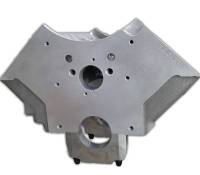
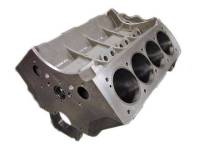
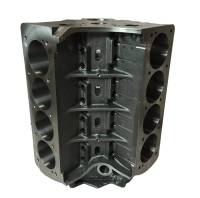
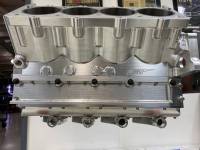
Butler stocks aftermarket Pontiac blocks here: the IAII cast iron and aluminum castings in Butler's Ready to Machine trim, the no-water-jacket Big Chief solid aluminum block, and the Visner billet block. Original cores are prepped in house but are sold only as part of a kit or a complete engine.
Browse Engine Blocks Products


Popular Brands:
More About Engine Blocks
1. Original Pontiac castings
Butler still starts a great many engines on factory iron. What separates a usable core from a boat anchor is the inspection, not the casting number.
| The prep | bake, blast and clean, visual inspection, magnaflux and sonic test, new dowel pins, align hone, torque-plate bore and hone, square deck, a full day of deburring and thread chasing, then a final jet wash. |
| Bore is decided by the block | on forty-plus year old castings the cylinders clean up differently every time. Final bore is set at the honing step and wall thickness verified again there, so displacement is confirmed during machining. |
| Core policy | original blocks are in short supply, so Butler sells them inside kits and engines rather than as a bare block, and buys 1965-1978 Pontiac 389, 400, 421, 428 and 455 cores. |
2. The IAII aftermarket block
When the target is more stroke, bore or power than factory iron will carry, the IAII is Butler's answer. The cast iron and aluminum versions share an architecture.
| Siamese cylinders | the cast iron block runs 4.145" to 4.400" bores with a minimum .200" wall at 4.400". The aluminum block is cast at 4.245" and can go to 4.350". |
| Bottom end | all-steel registered main caps with a splayed four-bolt pattern on the three center mains, widened main webs and clearance for a 4.750" stroke crank. Caps and main studs come with every IAII block. |
| Built-in fixes | reinforced cam tunnels, a solid lifter galley with drilled oil returns, front main oil feed, wider pan rails, thicker decks and dual Pontiac and corporate bell housing patterns. |
| Aluminum specifics | AA356 spec, heat treated to T6, and fully water jacketed for street or race. |
| Solid blocks | the Big Chief aluminum block deletes the water jackets and uses ductile iron sleeves. The Visner billet block is skirted and cross-bolted with splayed billet caps and a taller deck. |
3. Specifying a Ready to Machine block
RTM blocks arrive pressure tested and inspected, with lifter bores, cam journals and cylinder bores left undersized so your machinist finishes them to your clearances. Deck height is measured and documented.
| Cam tunnel | standard or large. Decide this alongside the camshaft, not after it. |
| Lifter bores | standard or bushed. Bushed bores are the choice when a big solid roller is in the plan. |
| Availability | large cam journal blocks with large or standard lifter bores are the normal stocking configurations. Anything else is a long-lead special order. |
Unsure which combination suits your build? Call with the stroke, bore and cam style you intend to run. That conversation is cheaper than machining the wrong tunnel.
Not sure what your Pontiac needs?
Email our tech team at tech@butlerperformance.com. Tell us your engine, heads, car, and power goal, and we will put the parts together as one combination that works.