Pontiac 400 Engine
The Legendary Pontiac 400: A Foundation for Modern Muscle
The Pontiac 400 cubic inch V8 engine is one of the most iconic engines of the American muscle car era. Introduced in 1967, this engine served as the backbone for legendary cars like the Pontiac GTO and the Firebird Trans Am. While its factory specifications were impressive for the time, the true legacy of the 400 block lies in its incredible versatility and strength as a platform for high-horsepower modern builds.
The Heart of Pontiac Performance
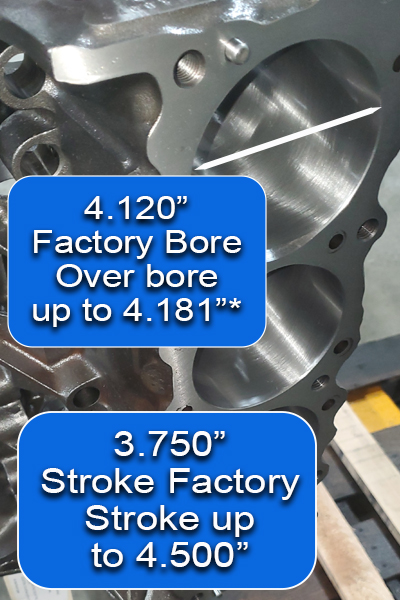
The original Pontiac 400 engine featured a bore and stroke of 4.120 inches and 3.75 inches, respectively. Unlike other GM divisions that shared engine designs, Pontiac's V8 engines maintained a distinct, common external block architecture from 326ci up to 455ci. This "one-size-fits-all" design means that nearly all Pontiac V8 blocks, including the 400, share critical dimensions, making them ideal candidates for performance upgrades and large-displacement conversions. So these Pontiacs are not small blocks or big blocks, just Pontiacs.
The stock 400 block is inherently strong. Most factory blocks are capable of handling significant power, with standard 2-bolt main caps often sufficient for street applications up to about 600 hp. For higher horsepower builds or race applications, the block can be upgraded with 4-bolt main caps and other reinforcements. The block is also known to handle up to a .060-inch overbore (4.180/4.181), allowing builders to clean up cylinder walls and increase displacement. (some bore can go up to 4.185" or .065" over if sonic tested for wall thickness)
Stroking the 400: The Path to High Horsepower
The most significant modern performance strategy for the Pontiac 400 is the use of stroker kits. A stroker kit increases the engine's displacement by replacing the stock crankshaft and connecting rods with parts that increase the piston travel (stroke). The Pontiac 400, with its robust structure, is an ideal candidate for this modification, a specialty popularized by companies like Butler Performance.
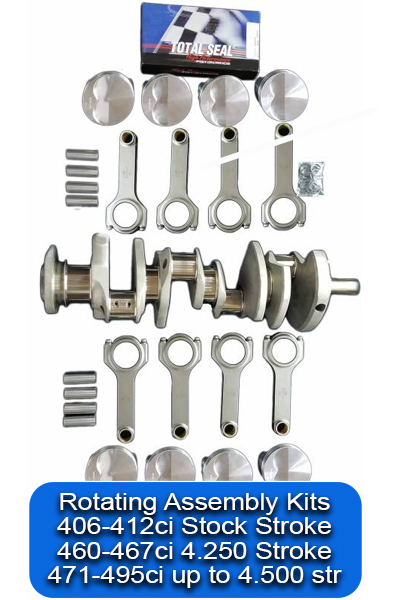
By increasing the stroke, the 400 block can be transformed into a massive engine capable of producing huge power and, critically, instant torque. While the factory 400 features a 3.75-inch stroke, modern performance builders utilize various kits to achieve much larger displacements:
-
406-412 cubic inches (ci): Using the stock 3.750" stroke but with a significant overbore. Stock stroke uses the 6.625" Pontiac rods.
-
460-467 cubic inches (ci): The most popular configuration using a 4.250-inch stroke. Engines in this range can reliably produce 600+ horsepower and 600+ ft-lbs of torque on pump gas with modern components like CNC-ported aluminum heads (e.g., Edelbrock units) and hydraulic roller camshafts. These engines are still totally streetable with a noticeable increase in torque and application drivability is dictated by cam choice. 4.250 stroke uses the 6.800" BBC rod.
-
Up to 487-495+ cubic inches (ci): Achieved with a 4.500-inch stroke, pushing the limits of the factory block and often reserved for extreme street/strip or bracket racing applications, yielding power levels well over 700 horsepower. 4.350, 4.375, and 4.500 stroke uses 6.700 or 6.800 rods depending on piston compression height.
These massive displacements are achieved while still using the original 400 factory block, a testament to its excellent design and casting quality.
Essential Performance Considerations
When building a high-performance Pontiac 400, several key component choices are recommended for reliability and power:
-
Crankshafts: For strong street applications up to 550-575 hp, a modern cast-steel crankshaft with up to a 4.250-inch stroke is a good choice. For more extreme high-horsepower engines, a forged crankshaft is essential for superior strength.
-
Rods and Pistons: Upgrading to high-quality forged connecting rods (H-beam or I-beam) and forged pistons is standard practice. Piston design (flat top, dish, or dome) is used to set the compression ratio.
-
Compression Ratio: For street use on readily available pump gasoline (91-93 octane), Butler Performance recommends a maximum of approximately 9.5:1 compression with cast iron heads and up to 10.5:1 with modern aluminum cylinder heads. This balance ensures reliable performance without requiring race fuel.
The Pontiac 400 remains one of the greatest vintage engines to build for muscle car enthusiasts. It offers the classic look and sound of the golden age of motoring while providing the structural integrity needed to create a massive, high-horsepower powerplant capable of dominating on the street or the track.
400 Block Cu In Chart
| 400 Block | Stroke | |||||
| Bore | 3.75 | 4.00 | 4.21 | 4.25 | 4.50 | |
| Stock | 4.120 | 400 | 427 | 449 | 453 | 480 |
| +.030 | 4.150 | 406 | 433 | 456 | 460 | 487 |
| +.035 | 4.155 | 407 | 434 | 457 | 461 | 488 |
| +.040 | 4.160 | 408 | 435 | 458 | 462 | 489 |
| +.060 | 4.180 | 412 | 439 | 462 | 467 | 494 |
| +.065 | 4.185 | 413 | 440 | 463 | 468 | 495 |
1975-76 400 557 Casting numbers- When upgrading to a stroker kit in the 400 block, blocks with Casting Numbers ending in 557*** we recommend limiting to 4.000" Stroke and less than 500hp due to thinner main webbing. These can tend to break under higher stress from the larger stroke.

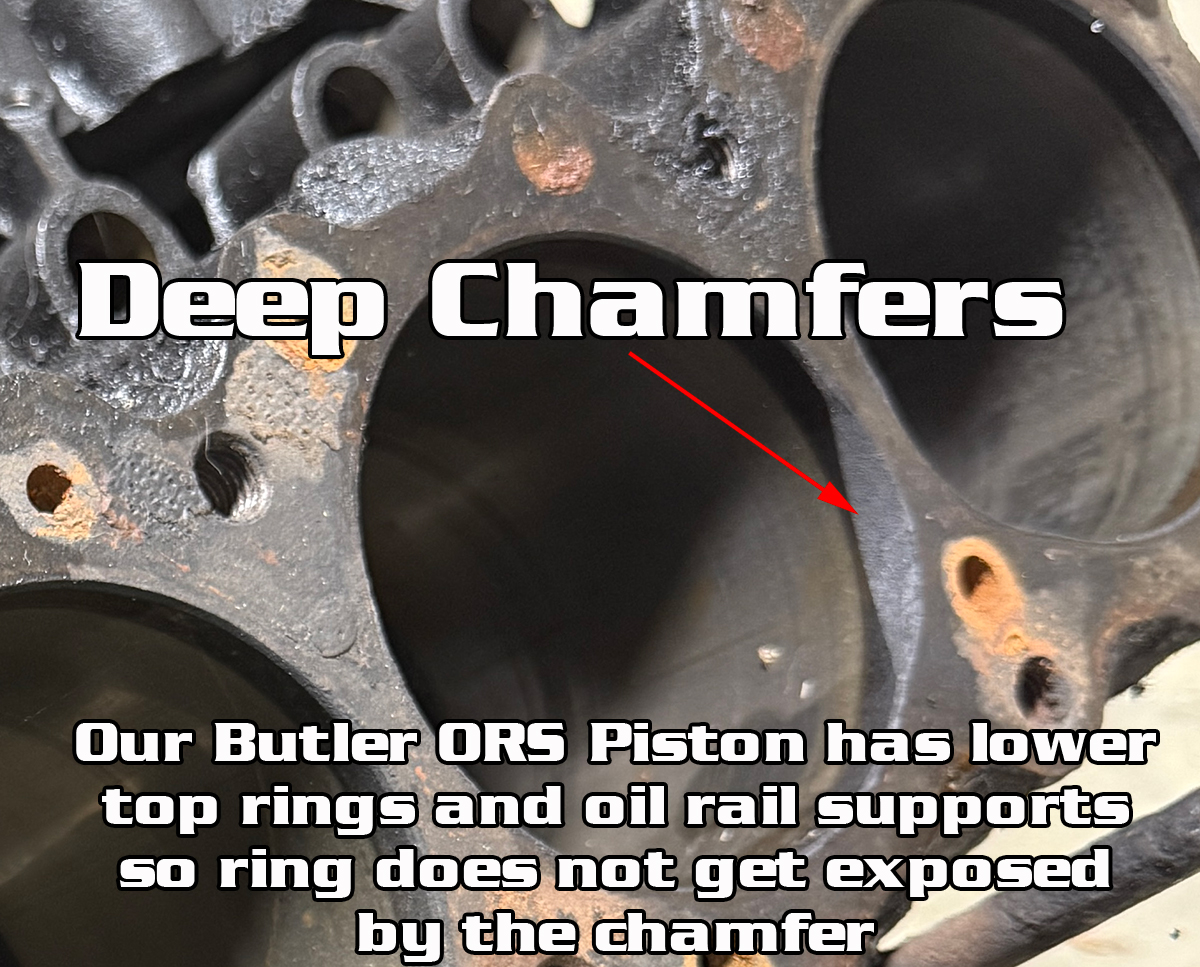
Early 1967 400's may have deep 389-421 style chamfer in the cylinder. If the cylinder chamfer is deeper than .250 you may need a piston that has a top ring groove that has been lowered to keep from exposing the top ring when the piston is as top dead center. We have designed a piston specifically for this block with lower oil rings and an oil rail support.