Suspension
Pontiac V8 Suspension
Start With the Symptom — Suspension for Pontiac V8s
Everything an engine does has to travel through the suspension before it reaches pavement. Tired springs, hardened rubber and a factory-diameter sway bar are why a 400-powered GTO leans on the door handles in a corner and why a Trans Am hops the inside tire off a bumpy exit. Replacing those pieces as a matched set changes how the car feels far more than another twenty horsepower will.
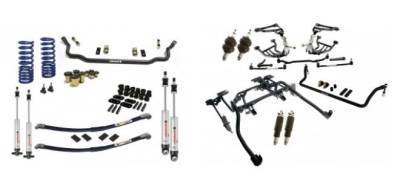
Our shelves here run to RideTech systems sorted by chassis: StreetGRIP for a stock-style rebuild, HQ Series coil-overs for pro-touring, and ShockWave air ride with RidePro management for cars that need to lay out at a show. F-body subframe connectors round it out.
Select a Sub-Category

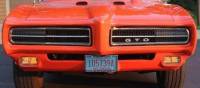
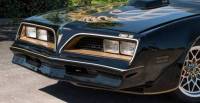
Popular Brands:


More About Suspension
1. Match the System to How You Drive It
Rather than starting from a brand tier, start from what bothers you about the car now.
| It rides badly and sits too high | StreetGRIP is the fix. It swaps in as a direct replacement for original-style suspension and brings lowering springs, rebound-adjustable shocks, better bushings, a bigger sway bar and tall ball joints in one box. Nothing about the car looks modified afterward, which is why it suits restorations. |
| It will not hold a line | the complete coil-over system goes further. StrongArm control arms and tall spindles rewrite the front geometry, MuscleBars control roll, and HQ Series coil-overs let you dial ride height and rebound separately at each corner. |
| You want it on the ground at a show | the air ride systems substitute HQ Series ShockWaves, letting the car drop for photos and lift for driveways. Where budget matters more than the geometry upgrades, a CoolRide kit bolts air springs into the coil spring locations with application-specific brackets. |
2. Which Pontiacs Are Covered
Fitment follows the body, not the displacement under the hood.
| A-body GTO | split into 1964-1967 and 1968-1972 packages, with a 1964-1972 CoolRide air kit spanning both. LeMans and Tempest cars share these part numbers. |
| First-gen Firebird, 1967-1969 | StreetGRIP, coil-over and air systems, with the coil-over offered in pin spindle and hub spindle versions. The hub version runs Corvette C5 through C7 hubs and needs at least a 17" wheel; hubs are sold separately. |
| Second-gen Firebird and Trans Am, 1970-1981 | these use the TruTurn front package and a bolt-on rear 4-Link in place of the leaf springs. |
| Pontiac full-size, 1965-1970 | a front and rear CoolRide air system with HQ rebound-adjustable shocks. Order a control system alongside it, because one is not included. |
3. Firming Up the Structure
On F-body cars the chassis itself deserves attention before you blame the shocks.
| Subframe connectors | tying the front and rear subframes together is one of the most effective ways to make the car feel modern and solid. The PTFB connectors use a single-piece main beam, a large cross section and big mounting pads, ship powder coated with bolt-in hardware, and include solid body bushings. T-top cars benefit most. |
| Year matters | RideTech splits its Trans Am connectors into a 1970-73 piece and a 1974-81 piece. Check your build year rather than assuming one fits the whole run. |
4. Two Things to Settle Before Ordering
These come up on the phone constantly, and both are cheaper to handle up front.
| Spring rate follows your engine | RideTech calculates rates around a cast-iron-head Pontiac V8. Running an aftermarket block or aluminum heads takes weight off the nose, so note that on the order and we will substitute a lighter spring. |
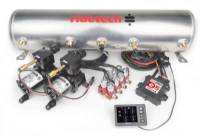
| Air ride needs management | plan on a RidePro package. The E5 digital control runs a touchscreen, dual Thomas compressors and a 5-gallon aluminum tank with Bluetooth control, and it is available preassembled as an AirPod. An analog 5-gallon system covers the simpler installs and can be converted to digital leveling later. |
Tell us the year, the body and what is in the engine bay, and we will match a system to it. Half the job of buying suspension is admitting how the car really gets driven, and we would rather sort that out at the counter than after the crate is open.
Not sure what your Pontiac needs?
Email our tech team at tech@butlerperformance.com. Tell us your engine, heads, car, and power goal, and we will put the parts together as one combination that works.